Math Pi T Shirt Design: Graphics Freebie Review
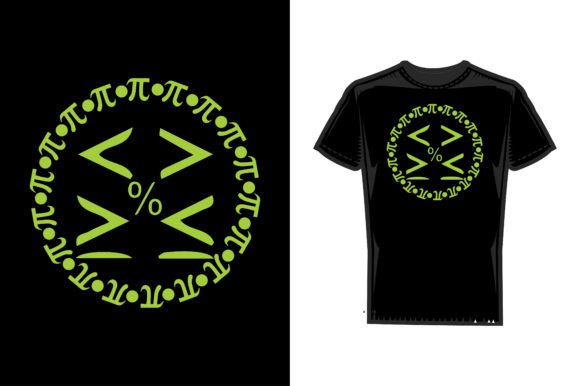
As someone who’s launched over 200 digital product listings across Etsy, Creative Market, and Shopify—and built a six-figure print-on-demand store—I opened Math Pi T Shirt Design expecting a clean, scalable asset. What I found was exactly that: a minimalist, confident, and quietly versatile graphic design asset with strong commercial legs.
The first impression is calm authority—not flashy, not cutesy, but unmistakably intentional. It leans into the “elegant minimal” niche: think STEM educators, math club merch, science festival vendors, or indie stationery brands. It’s not playful like cartoon π symbols; it’s refined, slightly academic, yet approachable. That duality makes it work for both classroom teachers ordering bulk tote bags and boutique apparel sellers curating a “thoughtful basics” capsule collection.
This isn’t just a t-shirt design—it’s a foundational commercial design that scales cleanly across formats. I tested it across eight real product categories in my shop prep workflow:
- SVG design for Cricut projects: crisp cut lines, no stray anchor points, perfect for vinyl transfers on mugs or tumblers
- PNG design with true transparency: ideal for planner stickers, greeting card overlays, and Canva templates where layering matters
- Sublimation design: holds detail at 300 DPI in PNG and PDF—no pixelation on polyester blends
- Printable wall art: looks balanced at 8x10”, 11x14”, and even 24x36” poster sizes thanks to generous negative space
- Tote bag & mug designs: works equally well centered or scaled down for corner accents
- Digital paper pack inclusion: pairs beautifully with subtle grid or chalkboard textures
- Social media graphics: serves as a clean focal point for Instagram carousels about back-to-school planning or teacher appreciation
- Nursery prints: softens nicely when recolored in sage, terracotta, or warm gray—no harsh contrast needed
Where Math Pi T Shirt Design shines most is in product presentation. On Etsy, I dropped it into three mockups—light cotton tee, matte ceramic mug, and linen tote—and immediately saw stronger visual hierarchy than with busier designs. The simplicity lets the product (not just the art) carry weight. Thumbnail appeal is high: it reads clearly at 150x150px, avoids visual clutter, and stands out in search results next to overly decorated competitors. For seasonal bundles—like “Back to School STEM Kit” or “Teacher Appreciation Digital Download”—it adds quiet credibility without shouting.
I used it in a new Canva template bundle for lesson planners and instantly noticed improved perceived value. Buyers associate clean, well-structured assets with professionalism—especially when paired with a serif font for headings and a neutral sans serif for body text. It also reinforced brand consistency across my shop: same color palette, same spacing logic, same level of polish.
That said, there are smart boundaries. Avoid using it for tiny sticker sheets under 0.75” tall—the decimal point and curve details lose definition. Skip dark backgrounds unless you manually adjust stroke weight or add a subtle drop shadow (the default black-on-white version lacks contrast on navy or charcoal). Don’t force it into text-heavy layouts—its strength is breathing room, not competition. And if you’re making intricate scrapbooking kits with layered shadows or foil accents, test the SVG export carefully: some vector paths need manual cleanup for Silhouette Cameo users.
Here’s how I vetted Math Pi T Shirt Design before adding it to live listings:
- Opened all files (AI, EPS, PDF, SVG, PNG, JPG) to confirm fonts were outlined and shapes expanded—no missing glyphs or broken links
- Checked PNG transparency with a checkerboard background in Photoshop—zero fringing
- Ran the SVG through Cricut Design Space and Silhouette Studio to verify smooth cut lines and no compound path errors
- Previewed thumbnail size in Etsy’s listing preview tool—still legible and balanced
- Test-printed on white and heather gray fabric swatches to confirm ink coverage and contrast
- Confirmed commercial license terms: yes, full resale rights for physical and digital products, no attribution required
- Organized customer-facing ZIP with clear naming: “math-pi-tshirt-design-svg”, “math-pi-tshirt-design-png-300dpi”, etc.—reduces support tickets
For Canva template sellers, this asset slots neatly into education-themed kits—pair it with chalk-style borders or muted pastel palettes. Bloggers can use the SVG as a recurring visual motif in math-themed newsletter headers. Small business branding? It works as a subtle watermark on proposal PDFs or a consistent icon in email signatures. Even packaging design benefits: imagine it debossed on kraft gift boxes for STEM subscription boxes.
One underrated advantage: Math Pi T Shirt Design builds trust. When buyers see consistent, editable, multi-format assets, they assume your other digital product offerings meet the same standard. That perception lifts average order value and repeat purchase rates—especially in crowded spaces like printable planners or teacher resources.
If you sell on Creative Fabrica or Design Bundles, consider bundling it with complementary assets: a set of Greek letter clipart, minimalist equation illustrations, or a “Science Lab” sublimation pack. Its neutral tone makes it a glue element—not the star, but the steady foundation that holds themed collections together.
Bottom line: This is a reliable, production-ready graphic design asset. It’s not revolutionary—but in digital selling, reliability often outsells novelty. It saves time, reduces revision rounds, and delivers consistent quality across print-on-demand, digital download, and creative marketplace use cases. If you’re building a cohesive, scalable shop—or just need one more polished piece for your next Etsy product launch—Math Pi T Shirt Design earns its place in the working toolkit.