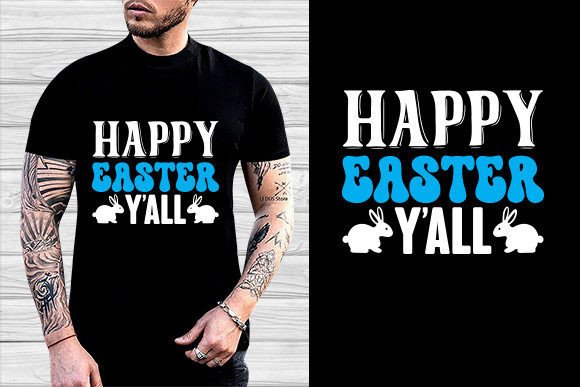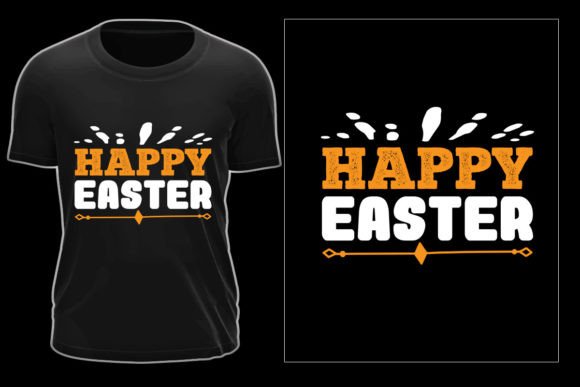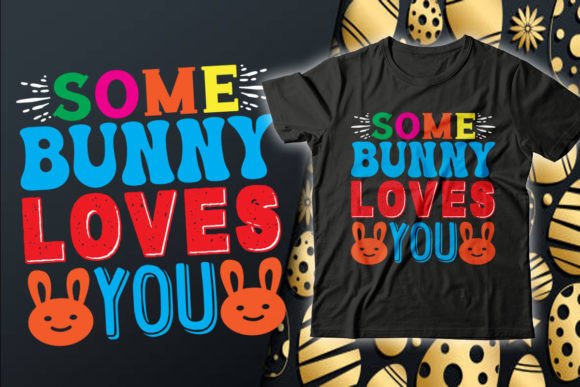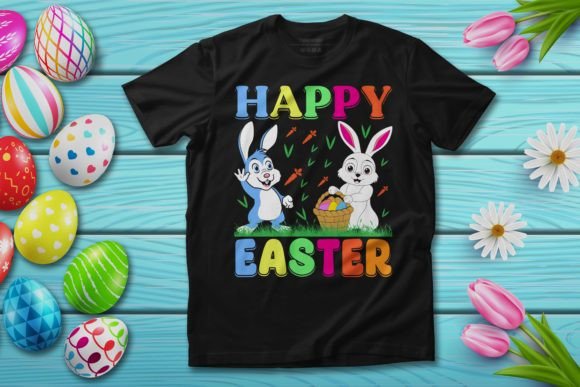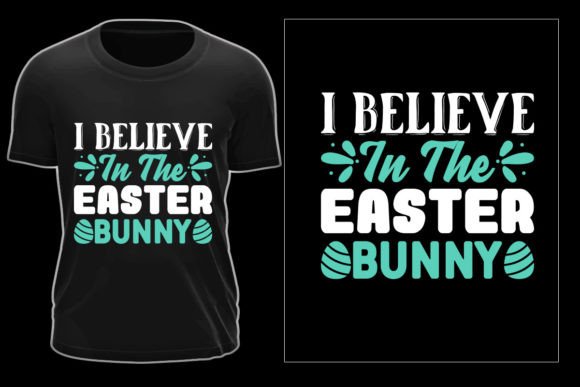
Easter Bunny Typographic T-Shirt Design Graphics
As someone who’s launched over 200 digital product listings across Etsy, Creative Market, and Shopify—and scaled seasonal collections for print-on-demand partners—I opened the Easter Bunny Typographic T-Shirt Design with a clear question: “Does this work *beyond* Easter Sunday?” Not just as clipart, but as a flexible, commercially viable graphic design asset that holds up across formats, audiences, and platforms.
First impression? Clean, confident, and quietly versatile. The “I Believe In The Easter Bunny” quote is set in a balanced, modern sans serif with subtle rounded terminals—playful without leaning into cartoonish, festive without feeling dated. It lands somewhere between family-friendly small business branding and lighthearted content creator energy. It’s not overly feminine or hyper-kid-focused; it reads well for moms launching handmade businesses, educators designing classroom printables, and even indie coffee shops running limited-run Easter merch.
This isn’t a decorative illustration—it’s a typographic statement. That distinction matters. As a digital product, its strength lies in adaptability: swap colors in seconds, scale to fit a onesie or a tote bag, layer it over textured backgrounds for nursery prints, or isolate letters for planner sticker sheets. The included file suite (AI, EPS, SVG, DXF, and 300 dpi PNG) means it transitions smoothly from Canva templates to Cricut projects to sublimation-ready mug designs—no pixelation, no jagged edges, no manual redrawing.
For Etsy sellers building themed bundles, this design anchors multiple use cases. Pair it with coordinating pastel patterns to build a printable wall art pack. Drop the SVG into a Cricut project for vinyl-cut Easter egg baskets or window decals. Use the high-res PNG in social media graphics announcing your spring collection launch—or embed it into a blog post about seasonal small business branding. It also performs well in digital download shops where customers expect ready-to-use assets: include it in a “Spring Typography Bundle” alongside floral borders and Easter-themed icons, and watch cross-sell rates climb.
Where it shines most is in visual storytelling and perceived value. On a product mockup—say, a soft unisex tee against a sunlit kitchen backdrop—the clean typography creates instant readability and warmth. As a thumbnail on Etsy or Creative Fabrica, it stands out among cluttered clipart-heavy listings because of its intentional negative space and strong visual hierarchy. Customers scanning quickly still grasp the message, tone, and seasonality in under two seconds.
It’s equally effective in packaging design and brand identity extensions. Add it to a kraft gift tag SVG, pair it with a handwritten font for a matching greeting card template, or scale it down for a subtle watermark on digital planner pages. For Canva template sellers, it slots naturally into Easter newsletter headers, Instagram story frames, or printable party invites—especially when layered with light textures or soft shadows to add depth without compromising editability.
But let’s talk realism: not every application is plug-and-play. Test it before publishing. Preview the SVG cut lines in Cricut Design Space—some vector exports retain hidden layers or compound paths that need simplifying. Check how the text renders at tiny sizes: while the design scales beautifully, fine serifs or tight letter spacing can blur below 0.5 inches, so avoid using it for micro-sticker sheets unless you manually adjust tracking. On dark backgrounds, verify contrast—some pastel fills may need a subtle white stroke or shadow to remain legible. And if you’re bundling it with other graphics, ensure consistent DPI and color mode (RGB for digital, CMYK for professional print partners).
Commercial license clarity is non-negotiable. Confirm the seller grants full commercial rights *for end products*—not just resale of the files themselves. That means you can legally sell t-shirts, mugs, or digital downloads containing this design, provided you’ve added original value (like custom layouts, bundles, or branded mockups). Never assume—always re-read the license terms before uploading to Redbubble or integrating into a Shopify product line.
Practical seller notes I’d apply before listing:
- Run it through three mockups—light fabric, dark fabric, and a sublimation surface—to assess color fidelity and balance.
- Test the PNG transparency on five different background colors (white, black, mint, lavender, charcoal) to confirm edge integrity.
- Open the AI file and check layer organization—if grouped or locked elements exist, ungroup and label layers clearly for customer usability.
- Pair it with at least three font families in sample Canva templates: a warm serif (e.g., Playfair Display), a friendly sans (e.g., Quicksand), and a relaxed script (e.g., Pacifico) to demonstrate styling flexibility.
- Include usage tips in your product description: “Works best on light to medium-toned apparel,” “Ideal for spring-themed digital downloads,” “SVG optimized for clean cuts on Cricut Explore Air 2 and Maker.”
Bottom line: the Easter Bunny Typographic T-Shirt Design isn’t just another holiday clipart file. It’s a strategic design asset—one that supports scalable product creation, strengthens seasonal brand storytelling, and reduces time spent editing or troubleshooting files. When used intentionally—with attention to context, contrast, and commercial compliance—it elevates everything from a single Etsy listing to an entire spring-themed digital download shop. For creative entrepreneurs building real revenue around design assets, that kind of reliability isn’t optional. It’s foundational.