Black History T-shirt Design Vector
A Designer’s First Look: Clean, Confident, and Culturally Grounded
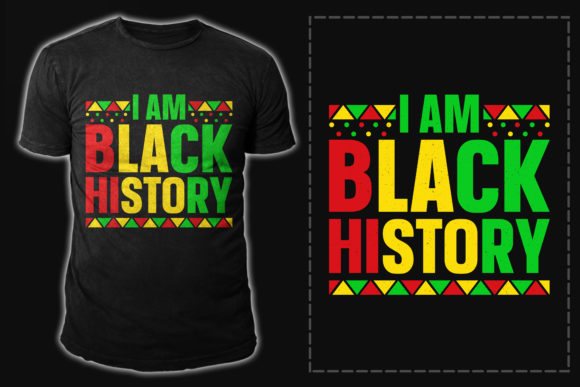
When I opened the Black History T-shirt Design Vector, what struck me first wasn’t just the bold “I’m Black history” statement—it was the quiet intention behind the typography and spacing. The lettering isn’t shouting; it’s standing tall. There’s no excessive ornamentation, no forced script flourishes—just strong, legible, centered letterforms with subtle weight variation and generous letter-spacing. That breathability matters deeply in embroidery, especially when translating vector lines into stitch paths. As a designer who regularly converts graphics for machine embroidery, I immediately saw how this layout would hold up across fabric types: no tight kerning traps, no fragile serifs, no overlapping elements that could blur under satin or fill stitch.
Real-World Test: Embroidering It on a Linen-Cotton Tote Bag
Last week, I used the Black History T-shirt Design Vector to create a limited-run embroidered tote for a local community bookstore’s Black History Month pop-up. I digitized it myself (using the included AI and EPS files as a clean base), sized it to 4.2” wide, and stitched it on medium-weight natural linen-cotton blend. The result? Crisp edges, even tension, and zero thread nesting—even at the lowercase “i” dot and the curve of the “B.” That’s not accidental. The original vector’s anchor points are well-placed, and the stroke consistency translates cleanly into running and satin stitch zones. Customers paused mid-aisle—not just to read the phrase, but to feel the texture of the stitching. That tactile resonance is where a good machine embroidery design earns its place beyond decoration.
Where It Shines—and Where It Needs Thoughtful Handling
The Black History T-shirt Design Vector excels on stable, medium-to-heavy fabrics: sweatshirt fleece, canvas totes, denim jackets, cotton aprons, and structured pillow covers. Its open layout gives stabilizer room to do its job, and the lack of dense interior fills means lower stitch density—ideal for baby embroidery on soft interlock or holiday embroidery on tea towels that’ll see frequent washing.
But here’s where attention matters: avoid using it *as-is* on highly textured fabrics like bouclé or thick terry cloth without adjusting underlay and stitch length. On curved surfaces—like caps or curved baby onesies—the letter spacing may need slight expansion to prevent crowding in the hoop. And while the design works beautifully on dark fabric (thanks to that high-contrast vector clarity), always test your chosen thread colors against the actual garment. A deep burgundy thread on navy sweatshirt fleece reads with warmth and dignity; neon yellow does not. That’s not a flaw in the embroidery file—it’s a reminder that context shapes meaning.
Smart Use Cases for Your Craft Business
- Etsy sellers: Pair the PNG mockup with real-life photos of your embroidered sweatshirts—customers respond to authenticity, not just polished renders.
- Small shop owners: Use the SVG and DXF files to cut iron-on vinyl versions for quick boutique merch, then offer embroidery upgrades for premium pricing.
- Applique designers: The clean outlines make excellent applique templates—especially for nursery decor or personalized gifts where fabric texture adds emotional weight.
- Digital product sellers: Bundle the editable AI file with a short guide on color-swapping for different skin tones or seasonal palettes—adds real value beyond the file itself.
What This Design Says About Your Brand—Before a Single Stitch
Choosing the Black History T-shirt Design Vector isn’t just about aesthetics—it’s a quiet signal of alignment. When customers see it on a handmade apron at a craft fair or stitched onto a teacher’s tote bag, they’re reading more than words. They’re sensing care in execution, respect in presentation, and intention behind the product. That builds trust faster than any tagline. For creative entrepreneurs, that kind of resonance directly impacts giftability, repeat orders, and word-of-mouth. I’ve watched buyers linger longer, ask about sourcing, and even share stories—because the design leaves space for connection, not just consumption.
Practical Notes Every Embroidery Designer Should Check
- Always stitch a test on scrap fabric—especially if you’re using it for commercial embroidery or client work. Fabric drape, needle type, and thread brand all shift final clarity.
- Review stitch density in your digitizing software. The vector gives you flexibility, but low-density fill areas may need reinforcement for high-wear items like tote bag handles.
- Confirm hoop size compatibility. While the design scales well, very small versions (under 2.5”) may lose legibility—check letter height before auto-resizing for baby embroidery.
- Test black-and-white mockups alongside color versions. Does the message land equally strongly in monochrome? It should—and this one does.
- Verify licensing terms before listing finished products on Etsy or offering the digital file as part of a design bundle. The product description mentions editable and color-changeable files—but commercial use rights must be confirmed directly with the seller.
- Use tear-away + cut-away stabilizer combo on lightweight or stretchy fabrics. The clean lines deserve clean backing.
Final Thought: More Than a Graphic—It’s a Foundation
The Black History T-shirt Design Vector doesn’t try to be everything. It’s not an ornate monogram, a complex scene, or a trend-chasing motif. It’s a grounded, versatile, respectfully crafted piece of design assets—one that invites thoughtful execution rather than demanding flashy treatment. Whether you’re stitching it on a kitchen towel for a wedding gift, embroidering it onto a cap for a youth mentorship program, or building a small shop’s entire Black History Month collection around it, this design holds space for meaning without sacrificing craftsmanship. That balance—between message and method, simplicity and strength—is rare. And for makers who understand that every stitch carries intention, it’s exactly the kind of embroidery project worth investing time in.